Saturday, 14 January 2012

world's top 3 worst car accidents ever

#3. Mercedes SLR - 165 MPH
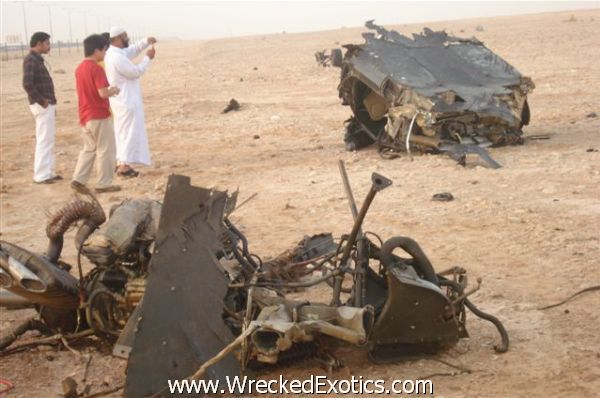
The owner of this SLR was showing off to his passenger on a desert highway in Qatar. They reached speeds of 160 MPH before losing control and flipping countless times. The car tore into 3 pieces.


#2. Dodge Viper - 170 MPH
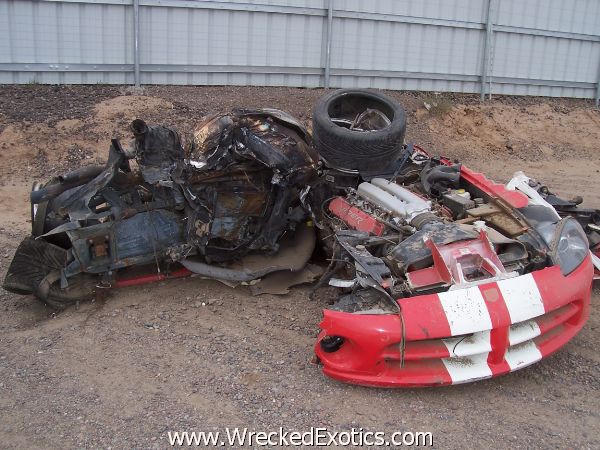
The driver of this 1998 Dodge Viper was pushing 170 MPH when he lost control on a stretch of Arizona highway. After flipping a few times, the car slammed sideways into a pole.


#1. Ferrari Enzo - 196 MPH
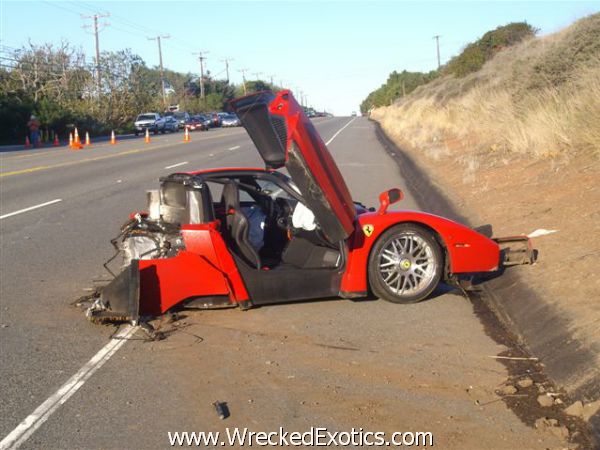
This is the world's highest known crash speed on open roads. There are only a handful of cars even capable of reaching these speeds. The driver was drunk and pushing the limits of this $1.3 million car on the Pacific Coast Highway when he lost control and crashed into a utility pole. Miracolously, he walked away from the accident.


Air cleaner/filter: Air is drawn through it. Contains a filter that blocks dirt before it can enter the engine.

Air intake manifold: Air is distributed into the combustion chamber.


Alternator: Takes over from the battery when the engine is running. Recharges the battery and supplies power to all electrical components.

Battery: Supplies the initial electrical power that starts the engine.

Carburetor: Most new cars now have fuel injected engines. Older vehicles have carburetors. This gadget mixes air and fuel in the proper ratio for burning in the engine's combustion chambers.

Coolant reservoir (tank): Holds hot coolant (antifreeze) that overflows from the radiator and also draws back into the radiator as it is needed.

Distributor: Distributes high voltage electricity to the spark plugs, one at a time.

Exhaust manifold: Set of pipes, one for each cylinder that conducts exhaust away from cylinders.

Fuel injection system: Sprays controlled amount of fuel directly into either the intake manifold or combustion chambers, resulting in a very precise air to fuel ratio that improves fuel economy.

Muffler: The interior "baffles" and tubes quiet the explosive release of exhaust.

Suspension system: This system receives a great deal of punishment from the roads. This system consists of shock absorbers, Struts, springs, and motor mounts, tires, tie rods, ball joints, control arms, torsion bar, strut rods, spindle, axles.

Power steering reservoir: This reservoir contains fluid for your power steering system. Once the reservoir cap is unscrewed the cap will consist of a dip stick. This will identify the fluid levels.

Brake fluid reservoir: The brake fluid level can be inspected by the plastic box or bottle by the fire wall on the driver side.

Disc brakes: A metal disk that spins with the wheel that the brake pad uses to pressure against to stop.

Oil dip stick: The stick that's used to check the level of the motor oil.

Rear Axle: A shaft that connects the power from the transmission to the wheels.

Radiator: The device that helps to remove heat from the cooling system as coolant passes through it.

world's top 10 fastest cars

1. Bugatti Veyron Super Sport: 267 mph,
0-60 in 2.4 secs. Aluminum, Narrow Angle 8 Liter W16 Engine with 1200 hp, base price is $2,400,000. Although the Bugatti Veyron lost the title to SSC Ultimate Aero on March 2007, Bugatti challenge the record in Germany on July 10, 2010 with the new 2010 Super Sport Version and the Veyron once again claims the title of the fastest car in the world at 267 mph. The original Bugatti Veyron has a top speed of 253 mph, priced at $1,700,000 and equipped with 1001 hp.


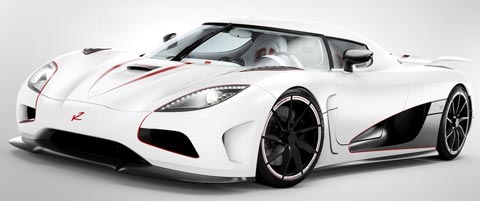
2. Koenigsegg Agera R: 260 mph
0-60 in 2.9 secs. 5.0-liter V8 Engine with twin turbo’s, housing 1099 hp. Base price is $1,600,000. If you're into snow sports, the Agera R can be fitted with a Ski Box as well as winter tires, not that I would take one on a ski trip or anything like that. While the Agera R has a massive theoretical top speed, the current tested top speed is 260 mph. Expect this snow car to be the Bugatti's arch enemy for the next 5 years.   


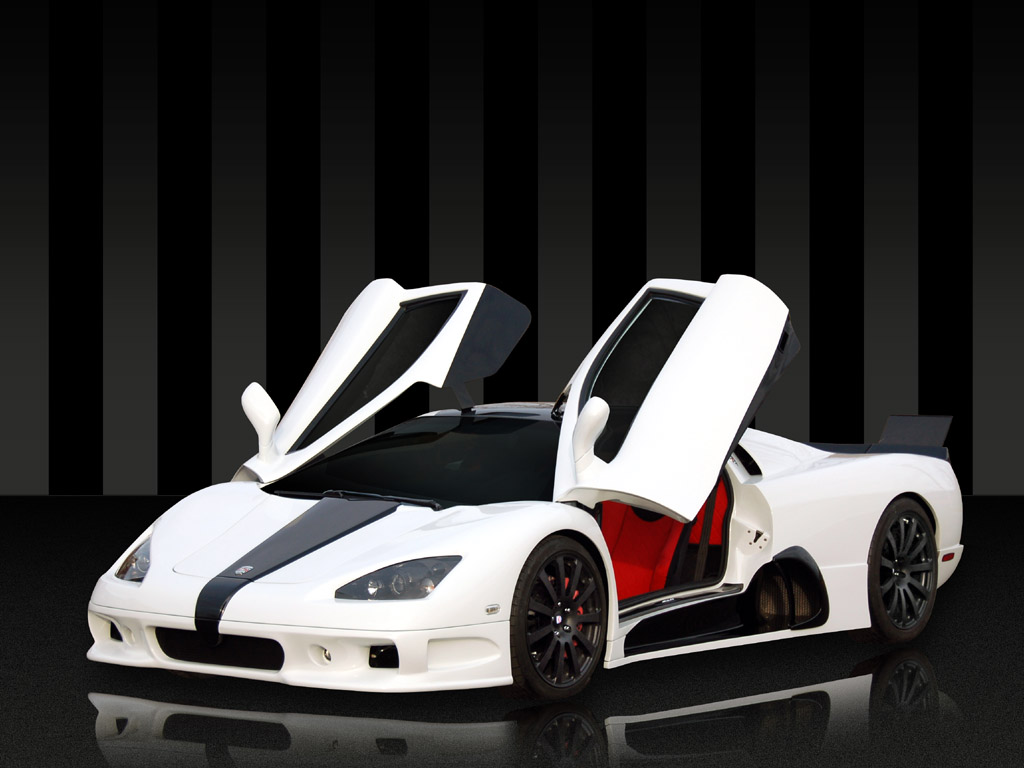
3. SSC Ultimate Aero: 257 mph,
0-60 in 2.7 secs. Twin-Turbo V8 Engine with 1183 hp, base price is $654,400. Tested in March 2007 by Guinness World Records, The SSC Ultimate Aero was the fastest car in the world from March 2007 to July 2010. On March 2011, the Koenigsegg Agera R also surpassed it, forcing this American made car to the #3 spot. Shelby SuperCars will continue their quest to reclaim the fastest car title, and their new SSC Tuatura might do the job.

4. Saleen S7 Twin-Turbo: 248 mph,
0-60 in 2.8 secs. Twin Turbo All Aluminum V8 Engine with 750 hp, base price is $555,000. Smooth and bad-ass. It will make you want to show it off non-stop.

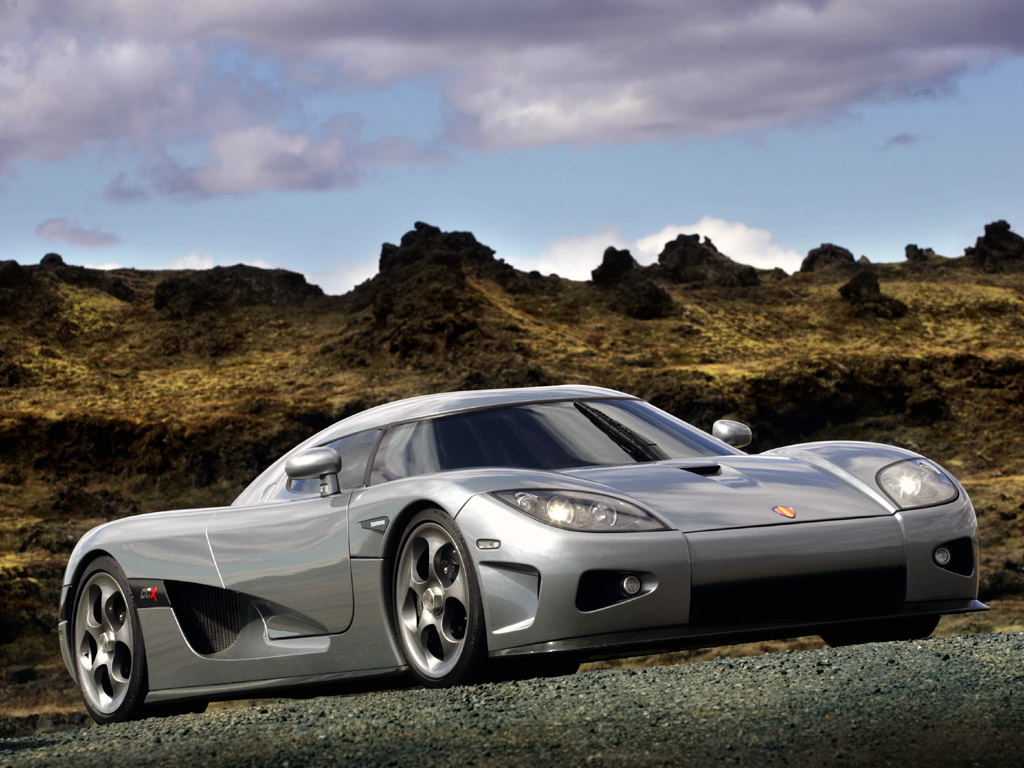
5. Koenigsegg CCX: 245 mph,
0-60 in 3.2 secs. 90 Degree V8 Engine 806 hp, base price is $545,568. Made in Sweden, it is the older brother of the Agera R, only losing to 4 other supercars in the world.


7. Gumpert Apollo: 224 mph
, 0-60 in 3.0 secs, 4.2 liter V8 Engine that houses 650 hp. Base price: $450,000. Gumpert claims that the Apollo was designed such that it could drive upside-down in a tunnel with speeds at 190 mph or above. Of course, no one has tested this yet.

8. Noble M600: 223 mph,
0-60 in 3.7 secs. Twin-turbocharged 4.4-liter V8 Engine with 650 hp. Base price is $330,000. The Noble M600 also happens to be a very cool car. Its inconspicuous design sports a slender and contoured body which does not scream out for attention at every second of the day.

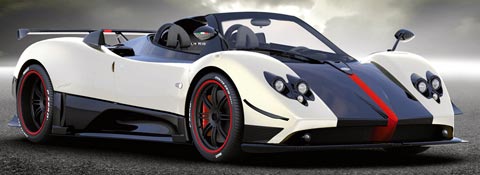
9. Pagani Zonda Cinque Roadster: 217 mph,
0-60 in 3.4 secs. Twin turbocharged AMG V12 engine that produces 678 hp. Base price is $1,850,000. The Pagani Zonda Cinque Roadster is a limited-edition, with five ever produced. It is the quintessential exotic and exclusive supercar.
 10. Ascari A10: 215 mph, 0-60 in 2.8 secs. 5.0 litre BMW V8 S62 Engine with 625 hp. Base price: $650,000. The company planned to produce 50 of these supercars at its factory in Banbury, England.


Tuesday, 10 January 2012

COMBAT VEHICHLES USED BY INDIA

Arjun MBT Mk1 


The Arjun (Sanskrit: अर्जुन) is a third generation main battle tank developed by India's Defence Research and Development Organization (DRDO), for the Indian Army. The tank is named for Arjun, a character in the Indian epic, Mahabharata.

 T-90S "Bhishma"/T-90M
The T-90 is a Russian third-generation main battle tank that is a modernisation of the T-72 (it was originally to be called the T-72BU, later renamed to T-90). It is currently the most modern tank in service with the Russian Ground Forces and Naval Infantry

T-72M1 "Ajeya"   
The T-72 is a Soviet-designed main battle tank that entered production in 1970. It is developed directly from Obyekt-172, and shares parallel features with the T-64A. The T-72 is one of the most widely produced post-World War II tanks, second only to the T-54/55 family, and the basic design has also been further developed as the T-90

BMP-2 "Sarath".

The BMP-2 (infantry combat vehicle) is a second-generation, amphibious infantry fighting vehicle introduced in the 1980s in the Soviet Union, following the BMP-1 of the 1960s.

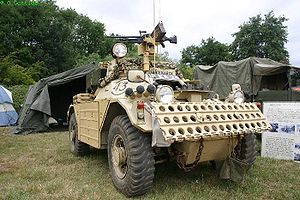
Ferret
               
The Ferret armoured car, also commonly called the Ferret Scout car, is a British armoured fighting vehicle designed and built for reconnaissance purposes. The Ferret was produced between 1952 and 1971 by the UK company, Daimler. It was widely adopted by regiments in the British Army as well as Commonwealth countries throughout the period.


VIDHWANSAK

Vidhwansak (Sanskrit:"The Destroyer") is an Indian multi-caliber anti-material rifle (AMR) or large-caliber sniper rifle manufactured by Ordnance Factory, Tiruchirapalli. It can be used in the anti-materiel role for destroying enemy bunkers, lightly armoured vehicles, radar systems, communication equipment, parked aircraft, fuel storage facilities, etc. It is also effective in long range sniping, counter sniping and ordnance disposal roles.
It is being sold at the cost of Rs 10 lakh (about $20,000) as of 2011.

Type                                -     Anti material rifle
Place of origin                  -     INDIA
Muzzle velocity                -     1040 m/s
Effective range                 -     1800 meters  

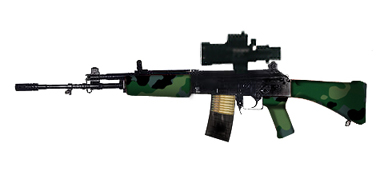
INSAS rifle

INSAS (an abbreviation of Indian Small Arms System) is a family of infantry arms consisting of an assault rifle, a light machine gun and a carbine. It is manufactured by the Indian State Ordnance Factory Board at its Ishapore factory. The Insas Assault Rifle is now the standard infantry weapon of the Indian Armed Force.


Type                          -   assault rifle
place of origin            -   INDIA
muzzle velocity           -   900 m/s
effective range           -    450 meters